
Árboles por persona en diferentes países (por) (la geografía)


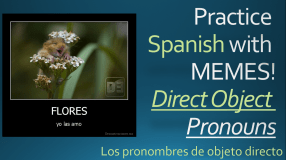 Memes are a great way to illustrate/review grammatical concepts and expand vocabulary!
One of the first goals of this website was to provide an organized site that I could refer to my students to find memes for fun practice on their own. I was not comfortable referring them to the original sites where I find the memes because there is a lot of inappropriate/offensive content. Furthermore, here I can narrow the selection to what will be most helpful for students and categorize them by topic.
Students respond very well to the incorporation of memes into the classroom. I use memes as a basis for quick conversation/analysis while illustrating target grammatical concepts. Since my goal in the classroom is to maximize communicative activities and maintain conversation in Spanish-only, I am working on a video series that has more slow-paced, English-based explanations of how these memes illustrate the grammatical concepts. My hope is that it will be an interesting way to review and/or present the material in a different way.
I am working on making more videos this summer because in Fall I will be teaching more «blended» classes with less time in the classroom and more time in online learning. The goal is not to assign my videos to students, but to offer them as a resource for further explanation/exploration/review that will complement our in-class communicative activities. This is the first «meme-based» video, so feel free to give me any constructive criticism!
Click here to filter for all of the posts on this site categorized to «objeto directo»to find more memes!
Enjoy the video!





 Who’s that present for? Who did you go to the movies with? Sure, grammar rules tell us not to end sentences with prepositions in English, but we hear it all of the time!
Spanish, on the other hand, is a different story. This contrast leads us to such mistakes as «*Quién es este regalo para?»
In this video lesson, I explain how to understand and fix the common error of ending phrases with prepositions in Spanish.
Want to test your knowledge before you get started? Here is a free handout:
HANDOUT: Errores comunes. Terminar una frase con una preposición
Try it before watching the video, try again after the lesson is finished, and then check the answer key!
ANSWER KEY Errores comunes. Terminar una frase con una preposición
Enjoy the video!
Also, here is the lyric video for the song I mention in the video, «¿Con quién se queda el perro?» by Jesse &Joy.
 estudiafeliz