No dejes para maña…

no-dejes-para-manana

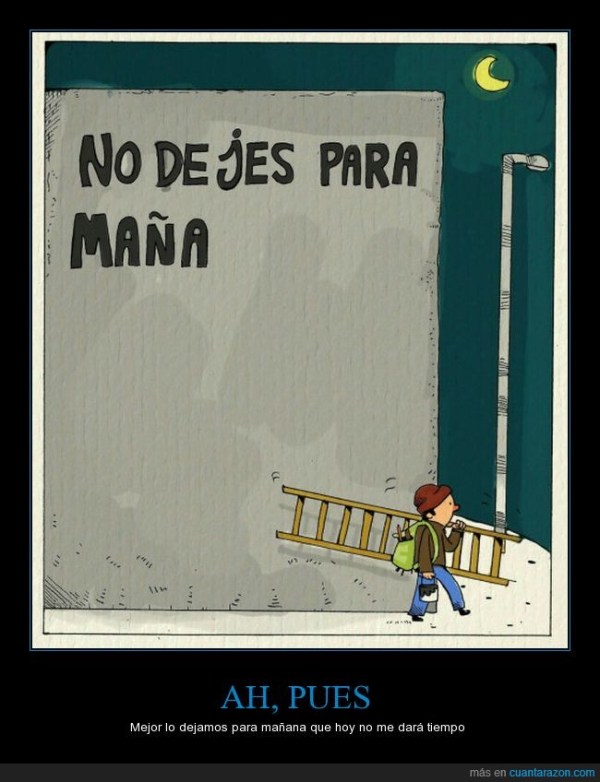
Este chiste se basa en el refrán popular:

no-dejes-para-manana-yellow

¿Crees que es un buen consejo?

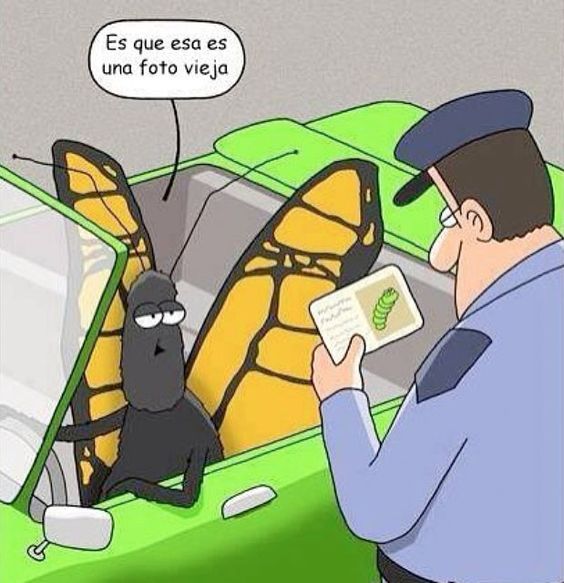
Es que esa es una foto vieja…

Pregunta de gramática: (scroll down for discussion of answer)

What is the grammatical gender of the word «foto,» masculine or feminine?

Hint: look at the other words in the sentence that describe «foto.»

Vocabulario: (scroll down for answers)

la mariposa

la oruga

la licencia de conducir -o- el carnet de conducir

una foto vieja

In this comic, the words «esa,« «una and «vieja« all describe the word «foto,» and they all end in «a.»

That tells us that «foto» has a feminine grammatical gender even though it ends with the letter «o.» Any ideas why?

«La foto» is short for «la fotografía,» so it actually does end in «a» in its original form. Can you think of other words like this?

La moto = la motocicleta

La bici = la bicicleta

La compu = la computadora

¿Más ejemplos? If you think of any more examples, leave a comment to share with us!

Vocabulario:

la mariposa = the butterfly

la oruga = the caterpillar

la licencia de conducir -o- el carnet de conducir = the driver´s license

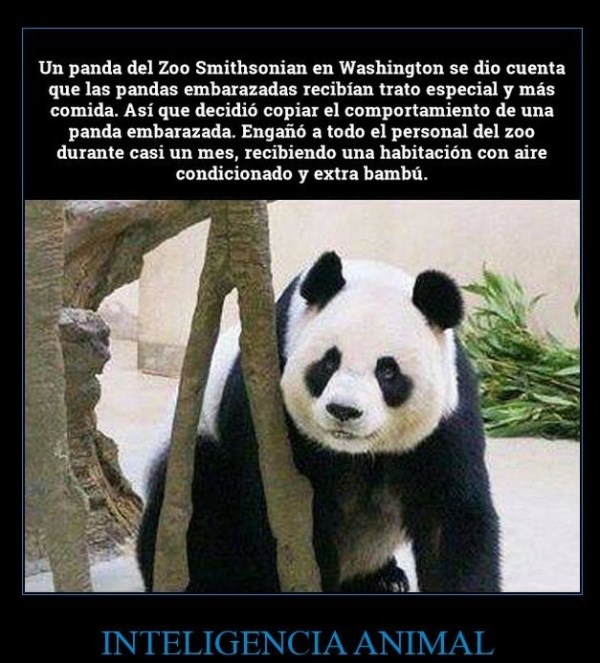
El panda inteligente: Mini-lectura interesante con preguntas de pensamiento crítico

Antes de leer:

¿Conoces estas palabras?:

(Haz clic para ver la definición en el dicciónario)

darse cuenta

embarazada

engañar

el comportamiento

Después de leer:

Responde a las siguientes preguntas con frases completas.

1. ¿Crees que este panda es inteligente o tramposo (o los dos)?

2. ¿Conoces una historia de un animal muy listo? ¿Qué hizo este animal? (Si no conoces una historia verdadera, ¡puedes inventar una historia creativa!)

Panda inteligente

¡Más!: Haz clic aquí para ver otro chiste sobre un guepardo listo…


¿Qué le sirvo señor? (Verbos de cambio raíz)

que le sirvo señor

Modales en la mesa a nivel internacional: Actividad cultural para practicar los mandatos informales

Modales EspañaLos mandatos informales, informal «tú» commands, can be a bit challenging at first because you must remember to conjugate the verb differently depending on whether the command is affirmative (Yes! Do it! ¡Sí! ¡Hazlo!) or negative (No! Don´t do it! ¡No! ¡No lo hagas!) This cultural presentation will take you on a journey of table manners around the world while practicing affirmative versus negative tú commands.

Objectives: 

  • Practice conjugating affirmative and negative tú commands
  • Practice vocabulary about food & the table
  • Make cultural connections about table manners

First, conjugate the verbs in this handout: Modales curiosos: Mandatos Informales Handout

Now, see how you did with this video lesson!

Also, here’s a Powerpoint presentation based on this lesson (especially for teachers!): Modales Internacionales Powerpoint

Share your reflections and what you´ve learned in the questions at the bottom of the handout. Do you think any of these tips for international table manners will come in handy someday?

Modales México

The images in the presentation were adapted for educational purposes from an infographic & article by Huffingtion Post España.

Also, thank you to the Teaching & Learning Spanish Blog Facebook Page for sharing the Huffington Post article.

If you would like to share these materials, please do so by providing a link to this blog post. Thank you!

Update: A typo in the handout has been corrected (10-8-2018)!

Update: This post has been updated to include the video lesson (5-21-2020)!

La rana y el sobre: Quick writing prompt (pretérito)

Escribe una leyenda por cada imágen de la tira cómica.

Write a caption for each image of the comic.

Usa el pretérito para narrar eventos que ocurrieron en el pasado.

Use the preterite form of verbs to narrate events that occurred in the past.

ranas. pret. writing

Algunas palabras útiles:

la ranafrog

el sobreenvelope

la lenguatongue

pegajoso/asticky

escribirto write

cerrarto close

la cartaletter (written correspondence)

El currículum de Homer Simpson (vocabulario: las profesiones)

¡El currículum de Homer Simpson es impresionante! Además, es un meme divertido para presentar vocabulario sobre las profesiones. Una actividad basada en este meme: Crear un currículum de otro personaje (¿Barbie, Bugs Bunny, Wishbone? ¡No sé cuáles programas son populares hoy en día! ¡Deja un comenario si tienes una idea!)

Homer Simpson´s resume is impressive! Also, it´s a fun meme to introduce vocabulary about professions. An  activity based on this meme: Create a resume for another character (Barbie, Bugs Bunny, Wishbone? I don´t know which shows are popular these days! Leave a comment if you have an idea!)

Currículum de Homer Simpson

El que ríe el último ríe mejor…

el_que_rie_el_ultimo ríe mejor

El que ríe el último ríe mejor.

¿Cómo interpretas este dicho? ¿Hay un dicho parecido en inglés?

¿Qué está pensando el gato de la foto? ¿Y el perro?